New history booklet tells what it was like to live on the Bull Street campus that opened in 1828
COLUMBIA, S.C. — To outsiders, the then-called South Carolina Lunatic Asylum in the 1800s was an idyllic, tranquil place to live, with garden paths and therapeutic activities.
“No one would have supposed that they were crazy,” then-state Rep. Benjamin F. Perry wrote about the patients he saw on a visit in 1850.
To the patients, the institution’s campus along Bull Street was a place of abuse, isolation, degradation and hard labor, researchers wrote as part of a project memorializing stories of some people housed there.
Those patients’ stories often go untold, even in records of the abuse, said Kimberly Tissot, president of disability rights nonprofit Able South Carolina.
A 74-page online history released Tuesday, titled “People, Not Patients,” tells the stories of people housed at the institution and what they experienced there before its closure in 2003.
“For way too long, the history of this site has been told only through the lens of those who managed it,” Tissot said during Tuesday’s reveal at The Laundry, an event venue named for its historical purpose on the campus.
Past and present
More than 58,000 people were institutionalized at the campus on Bull Street, eventually renamed the State Hospital, at some point between its opening in 1828 and 1945, the length of the archive used for the project.
Historic Columbia researchers, funded with a nearly $10,000 grant from the nonprofit South Carolina Humanities, chose 30.
Those picked represented a variety of ages, races, economic backgrounds, genders and disabilities to show how people ended up on the campus and the conditions of their time there, said Katharine Allen, the Historic Columbia researcher who worked on the project.

They included people hospitalized for physical disabilities as well as mental ones. Some returned to their families after staying for several years, but many spent the rest of their lives on the campus.
Take, for instance, Samuel Able, who came to the institution at around 10 or 11 years old in 1866 with a cleft palate so severe he couldn’t speak. Able, who researchers described as mischievous and bright, died in the institution around 20 years later, Allen said.
Or consider Edwin Syfan, a 39-year-old father who spent about two years there before suing to leave, she said. When Syfan died of tuberculosis he contracted during his institutionalization in 1912, his brothers recalled him as gentle, unassuming and self-sacrificing, Allen found in an obituary.
“As a friend and companion, he was genial, bighearted kind and true,” Syfan’s obituary read.
Those who did receive medical care were often subject to experimental treatments, such as shock therapy, Allen said.
Mary Sandifer, one 18-year-old patient mentioned in the booklet, was shocked 93 times during her eight-month stay from 1945 to 1946, which started because she was “very nervous” and “very talkative.”
The booklet also includes eight “modern voice,” which can be heard online. Patients who are still living told interviewers stories of their time in the State Hospital during the 1970s through the ’90s. At least four attended Tuesday’s release.
Among them was Bryan Waymer, who first came to the Bull Street campus at age 17, when he started showing symptoms of paranoid schizophrenia, he said. Staff handcuffed him, put him in solitary confinement and looked down on him for his mental health diagnosis and because he’s Black.
“They used prejudice on us,” Waymer, now 43, told reporters Tuesday. “They damaged us.”
Like Waymer, patients throughout the years reported receiving little actual help in the institution. Instead, they were often restrained, put to work in the nearby fields or in the laundry buildings, and ignored.
Kesha Jones, who was admitted at age 17 in 1987, was brought in for symptoms of autism, anxiety, bipolar disorder and a learning disability. She found friendships and small moments of joy amid the locked doors and hours alone over two years there, she said Tuesday. The experience made her stronger, but she wouldn’t want her son, who has autism, to go through the same.
“It wasn’t easy being who I was, and it’s not easy being who I am today,” Jones, now 54, told reporters. “But I thank God for everything.”
‘A vital warning’
In recent years, the BullStreet District has become the idyllic campus filled with peaceful walking paths and activities that state officials once represented it to be.
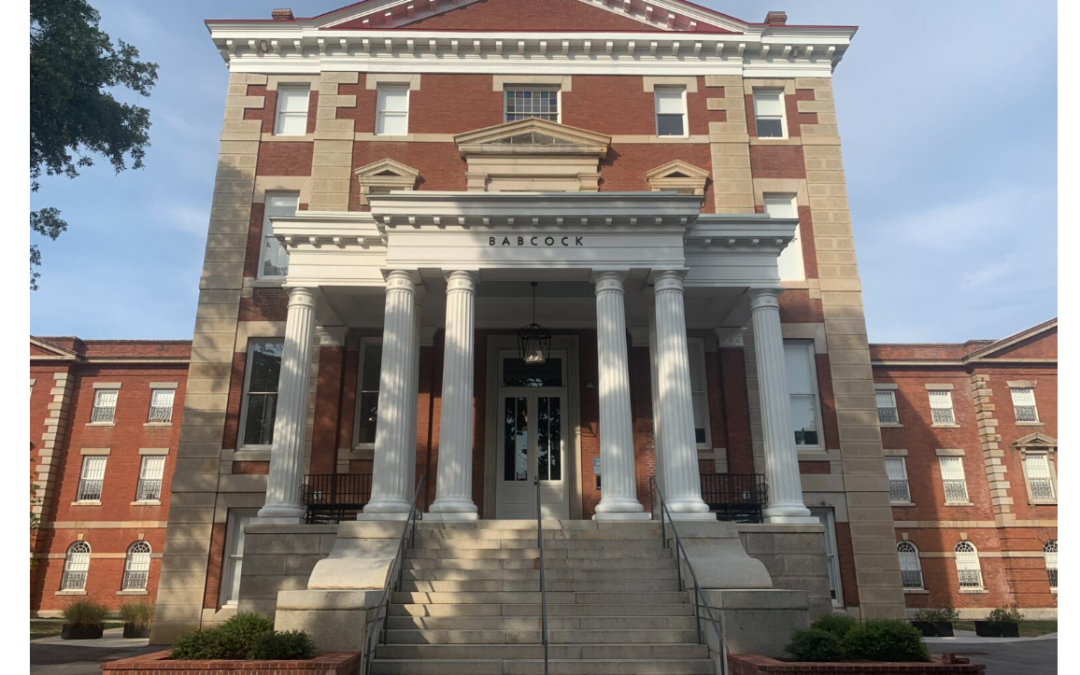
The Babcock Building, with its iconic cupola restored following a fire in 2020, houses apartments. Shops, restaurants and parking garages cover much of the property. Columbia’s minor league baseball team plays games at the campus’ Segra Park. Many historic buildings still stand.
“It can be easy to focus our attention here and on the campus’ incredible story of revitalization,” Allen said. “But do not lose sight of the other reality.”
Meanwhile, many people with disabilities remain in institutions where they have little interaction with the outside world. South Carolina settled a lawsuit with the federal government in December that claimed the state warehouses people with disabilities, giving them little opportunity to live on their own.
An executive order from President Donald Trump last year that would expand involuntary commitments, with the intent of getting homeless people with mental health problems off the streets, raised concerns among disability rights advocates that they might again wind up institutionalized against their will instead of living in the community.
Knowing the history of people with disabilities becomes much more vital facing those possibilities, Tissot said.
“This project is not just backwards-looking archives,” Tissot said. “It’s a vital warning for our present.”
Able SC wants to one day build a museum on the campus so visitors can easily see the whole history of the buildings where they shop, eat and live. The nonprofit needs about $3 million to get the project started, Tissot said.
In the meantime, the “People, Not Patients” online booklet can serve as a reminder of that past, Allen said. The stories included within it were among thousands of pages of records representing human lives spent at the State Hospital, Allen said.
“The stories we share with this launch of the digital resource can not begin to cover the realities that these men, women and even children experienced,” Allen said. “But I do believe it is a start.”
–scdailygazette.com