SOUTH CAROLINA: ‘Just wonderful’: USC musicians perform at Congaree National Park for country’s 250th birthday
In a celebration of American music, the student performers also hoped to introduce more people to classical performances
HOPKINS — The birds that usually sing at Congaree National Park had accompaniment Saturday from jazz musicians, saxophonists, singers and woodwinds.
The music, performed by ensembles of University of South Carolina students, commemorated two anniversaries: the nation’s founding 250 years ago and the national park’s initial designation under federal protection 50 years ago.
First preserved in 1976 as Congaree Swamp National Monument, the 26,000-acre park at the southern end of Richland County was renamed in 2003.
Stationed along a half-mile portion of the park’s iconic 2.6-mile boardwalk, four groups of musicians performed for dozens of people over the course of two hours. Some hikers stopped to take in entire sets, which the ensembles played on repeat for new visitors. Others paused for a moment or moseyed on, venturing further into a swamp awash with the sound of music.

On a bench between a woodwind quintet and the 11-member choir, where the music overlapped, Sherry Stormant leaned back on a bench, taking it all in. The 70-year-old drove about two hours from her home in Huger, a small community in Berkeley County, after seeing a post about the event on Facebook, she said.
The idea of listening to classical music while in a national park seemed so pleasant, Stormant knew she had to give it a try, she said. Saturday’s performances did not disappoint her.
“It’s just wonderful,” Stormant said. “It’s almost overwhelming, it’s just so beautiful and touching. Everybody’s face has a certain serenity to it.”
Near the visitor’s center at the park’s main entrance — 18 miles southeast of USC’s main campus — a jazz band played selections of various tunes. Where the boardwalk widened, a quartet of saxophonists played a series of songs, including “Amazing Grace” and a suite of ragtime music, another American-formed genre.
Both the quartet and the choir, stationed on a trail just off the boardwalk, performed versions of “Simple Gifts,” the tune written by the Shakers, a religious group that came to America to escape persecution in 1774.
Those pieces were meant to represent various parts of American culture, said Allister Frankle, a second-year doctoral student in saxophone performance, who played the soprano saxophone Saturday.

“There’s a bunch of different music happening that we (as Americans) have associated with us, whether it’s jazz or popular music or esteemed classical music,” Frankle said. “We’re very much a cultural center of a lot of different arts, so this is a great opportunity to share that.”
The university and national park partnered for a similar event last spring, when bassoonists played different parts of the same song throughout the forest as a way of representing the interconnectedness of nature.
That got staff at the park and school of music talking about another performance, this time in celebration of the country’s founding, said Elle Senn, a third-year doctoral candidate in bassoon performance who helped organize the event.
Playing at South Carolina’s only national park was a way of meeting people where they’re at, Senn said. Traditional sit-down performances generally draw the same crowds every time, since newcomers might feel intimidated or simply not want to sit still for that long.
Going for a walk at Congaree could introduce new groups of people to the music, either because it’s less commitment than a full-length concert or because they happened upon the performances while out for a hike, she said.
“I hope people see that music, even classical music, is a lot more accessible than it may seem,” Senn said.

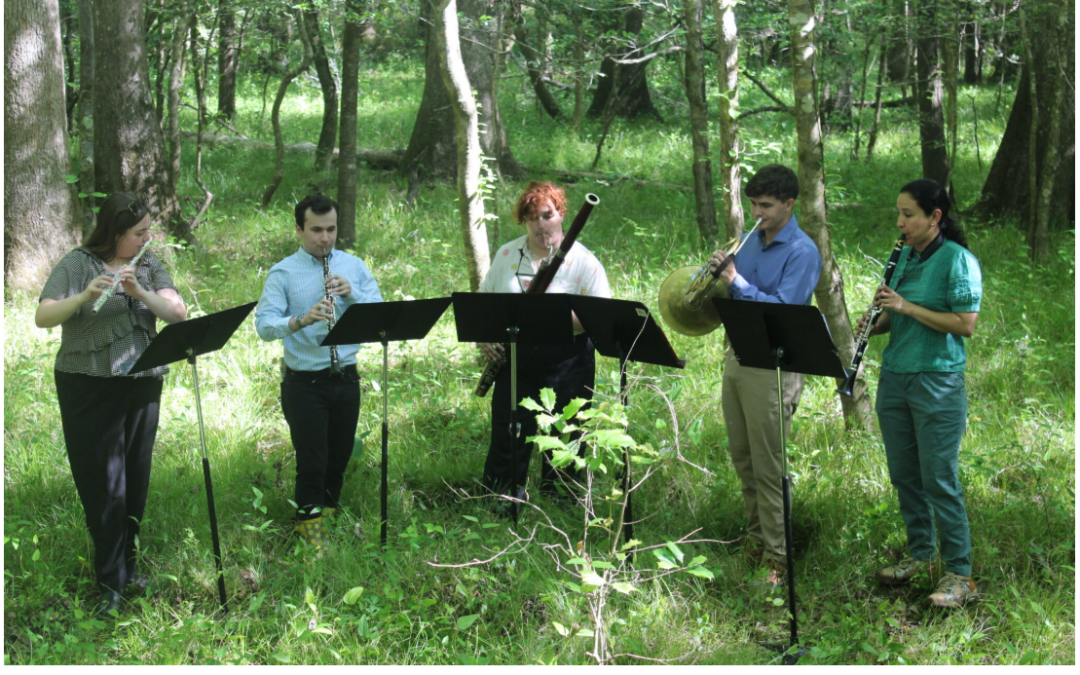
The Fuse Woodwind Quintet, which Senn oversees as artistic director, performed Antonin Dvořak’s string quartet “American,” written in 1893 as a celebration of the composer’s visit to Iowa, while standing in the underbrush just off the boardwalk, surrounded by cypress trees and swamp.
That should be proof enough that “we are willing to play literally anywhere” if it means exposing people to new music, Senn said, pointing out her muddy boots.
That accessibility drew Tyler Farley out to the park Saturday. The Lexington resident wants to expose her 4-year-old daughter, Emilia, to as much nature and culture as possible, and Saturday’s event seemed like the perfect chance to do both at the same time, she said.
Concert tickets aren’t always affordable, especially with a 4-year-old who’s unlikely to sit still for that long, so Farley jumped at the chance to show her daughter live music for free, she said.
“It’s a lot of just showing her a lot of new things at one time,” Farley said. “It’s an experience, and I’m hoping that when we leave here, she’ll want to call my parents and talk about it, call her dad and talk about it — something that sparks some spark in her, ignites something.”
For Emilia, who wants to be a ballerina when she grows up, the music gave her a reason to dance.
“It was just great,” Emilia said of the performances, dancing along. “I want to make them feel great about me dancing.”
Seeing people’s response, whether they were discussing the performances, listening quietly or, indeed, dancing, did make the musicians feel great, Senn said.
“It really does warm my heart,” she said.
–scdailygazette.com