VIRGINIA: Supreme Court Denies Confederate Flag Appeal
DANVILLE, Va. — The Virginia Supreme Court has announced that it will not hear an appeal of a Danville judge’s decision allowing the Confederate flag to be removed from a monument at Sutherlin Mansion.
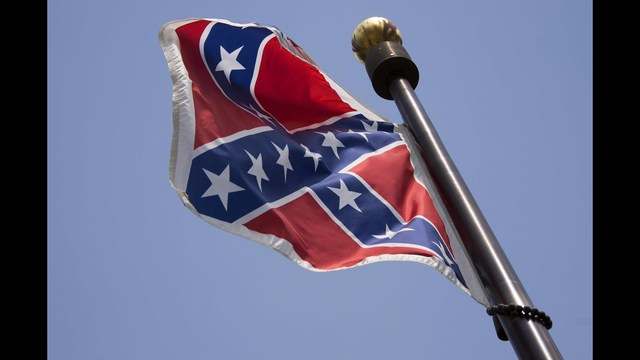
The Confederate Flag flies on the South Carolina State House grounds in Columbia, South Carolina, June 24, 2015.
Media outlets report the Heritage Preservation Association filed a lawsuit after the Danville City Council adopted an ordinance in August permitting only U.S., state and city flags to be flown on flagpoles owned by the city. Danville police removed the Confederate flag from the grounds of the city-owned mansion.
In October, a Danville Circuit Court judge dismissed the lawsuit. Kevin Martingayle, the attorney representing the HPA, argued for an appeal on May 24. But the Virginia Supreme Court’s ruling reaffirms the Danville judge’s decision.
Martingayle says he will file a petition for a rehearing.
Attorneys representing Danville said they were pleased with the court’s decision.
–Associated Press
###
SOUTH CAROLINA: Research Finds Citizens Still Split on Race
June 17 marked the one-year anniversary of the shooting of nine churchgoers attending Wednesday bible study at Mother Emmanuel AME Church in Charleston. Since that time, South Carolina has seen the removal of the Confederate flag from statehouse grounds, a continued conversation on gun violence and a call for healing from the families of the victims.
But for a team of researchers at the University of South Carolina, the question remains of whether race relations in the state have improved since last summer.
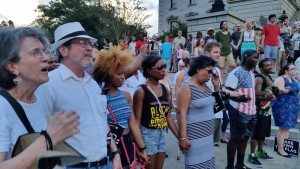
Hundreds gather to honor the Emmanuel Nine and call for the removal of the Confederate flag from Statehouse Grounds in July 2015. (File hoto by Kelly Petty)
Robert Oldendick, executive director of the Institute for Public Service and Policy Research, and fellow lead researcher Monique Lyle surveyed about 800 South Carolinians of all backgrounds about the Charleston shooting, policing and race relations.
Of all respondents, 56.6 percent said they felt extremely sad about the shootings, while 30 percent said they felt extremely angry. More than half of individuals surveyed, 55.3 percent, said they thought the accused shooter, Dylann Roof, should receive the death penalty. Nearly 39 percent said they thought he should be sentenced to life without parole.
Oldendick said the results of the survey showed that people did not draw a universal consensus as to whether the shooting led to positive or negative outcomes. Many said they thought the incident brought people together and that they were proud of the way state legislators responded, he said. But others who responded to the survey said they thought the shooting made the state look bad and highlighted racial divisions in South Carolina.
Still, others said the shooting brought about immediate reaction, but no follow-up.
“It really was kind of split,” Oldendick said.
But many of the results of the survey reflected current trends about how African-Americans and whites view public safety and the police.
While 81 percent of individuals surveyed said they thought it was the right decision to charge Charleston police officer Michael Slager with murder in the death of Walter Scott in April of last year, African-Americans reported feeling less safe than whites with law enforcement officers in their communities.
About 61 percent of blacks said they felt mostly safe with law enforcement compared with a little more than 85 percent of whites. Similarly, more than two-thirds of African-Americans surveyed said they think police are too quick to use deadly force, whereas only 22.5 percent of whites surveyed thought the same.
When asked whether police are more likely to use deadly force against a black person than a white person, the percentage of those who agreed jumped to more than 83 percent among black respondents.
And the question on the state race relations in South Carolina also brought about differing opinions. African-Americans were much more inclined than whites to rate race relations in the state as poor, with 31.7 percent of black respondents rating relations as poor compared with 10.2 percent of white respondents.
On the other hand, nearly half of the white respondents, 48.9 percent said race relations in the state were good. That compares with 24.4 percent of black respondents.
“Racial attitudes questions pretty much broke along lines of what was expected,” Oldendick said.

Yet, 98.8 percent of respondents agreed it is a good idea for South Carolina police officers to use body cameras. About 97 percent also said it was good for interactions between individuals and police to be recorded.
“People are using their cell phone technology that might help in situations with visual evidence,” Oldendick said. “People almost universally agree that we have this technology and we can learn more from it, so why not use it.”
Oldendick and Lyle’s study suggests there is little hope and optimism for the future of race relations in South Carolina out of the tragedy of the Charleston shootings. Perceptions of racial issues were mostly split despite a positive consensus in regards to overarching ideas about policing methods.
Researchers discovered that the Charleston shootings and the Walter Scott case are just two examples that lead many African-Americans to think race relations will always be a problem in South Carolina.
The researchers concluded, “…these results offer a modicum of hope and optimism for the future of race relations in our state. Yet they also signify our state’s abiding connection with its past. Despite the more than 150 years since their utterance, it is as if the words of venerated South Carolina Statesman John C. Calhoun were prescient and remain relevant: ‘The two great divisions of society are not the rich and poor, but white and black.’ ”
–coladaily.com
###
TEXAS: Can ‘Brexit’ Lead to ‘Texit’?
Britain’s surprise vote to exit the European Union has sent shockwaves around the globe, not least of all in the Lone Star State, as Texas nationalists seized on Thursday’s Brexit decision to renew calls for a referendum for Texas independence.
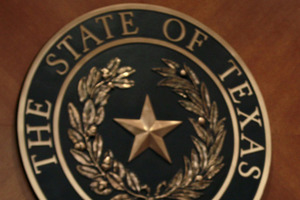
Kye R. Lee, The Dallas Morning News/AP
The seal of the State of Texas is pictured in a conference room at the State House in Austin in this May 1, 2013 photo.
“The forces of fear have lost. It is now important for Texas to look to Brexit as an inspiration and an example that Texans can also take control of our destiny. It is time for Texans to rally with us and fight for the right tobecome a self-governing nation,” Daniel Miller, president of the Texas Nationalist Movement, said in a statement early Friday.
The Texas Nationalist Movement claims a quarter million supporters – out of the state’s 27 million people – and the organization previously dismissed as a fringe group got closer than ever before to influencing the Texas Republican platform in May, falling just two votes shy in committee of bringing a secession resolution to the convention floor of nearly 4,000 delegates, as the Associated Press reported.
“Texit is in the air,” Mr. Miller told Reuters, and the term was trending on Twitter Friday, propelled both by jokes and campaigning by genuine Lone Star nationalists. The Texas Nationalist Movement has more likes on Facebook than the pages for Texas’s Republican Party and Texas’s Democratic Party combined.
Texas nationalist supporters echo many of the same themes as the Leave campaign, including opposition to big-government regulation and a desire for a more secure border – parallels that Mr. Miller sought to accentuate.
“You could take ‘Britain’ out and replace it with ‘Texas’. You could take ‘EU’ out and replace it with ‘US’. You could take ‘Brussels’ out and replace it with ‘Washington DC’. You could give you guys a nice Texas drawl and no one would know any different. So much of it is exactly the same,” Miller told The Guardian.
Yet while the European Union is an association of independent countries with pre-existing protocols for a member to exit, the US Constitution, say most legal scholars, bars states from leaving, as Justice Scalia and the White House have pointed out when calls for Texas’s independence gained public attention before.
“More than 600,000 Americans died in a long and bloody civil war that vindicated the principle that the Constitution establishes a permanent union between the States,” the White House wrote in response to a 2102 petition asking for Texas to be granted the right to peacefully withdraw from the United States, saying that Americans cannot allow healthy political debate to tear the country apart.
Texas nationalists cite the state’s unique history as a basis for secessionist claims. After declaring independence from Mexico in 1836, Texas was an independent country for nine years, until being annexed by the United States with a resolution that contains language that has often led to confusion about the state’s ability to secede, as the Texas Tribune reported. The resolution allows for the state to divide itself into “New States of convenient size not exceeding four in number, in addition to said State of Texas,” meaning can split itself into five new states, but not leave the Union.
Texas’s secession preceding the Civil War was declared “absolutely null” by the Supreme Court in the 1869 Texas v. White case. “The State did not cease to be a State, nor her citizens to be citizens of the Union,” the judges ruled.
The nation’s most populous state, California, also has murmurings of a secessionist movement that’s undeterred by the legal arguments and hopes to include a referendum on making California an independent country in the 2020 November presidential election.
–csmonitor.com
###