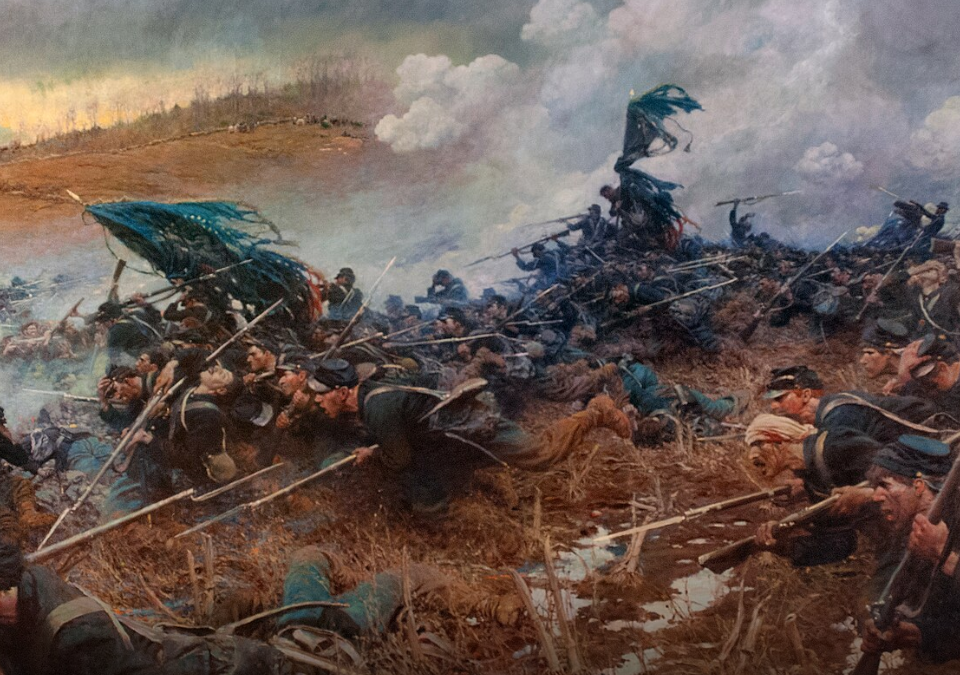
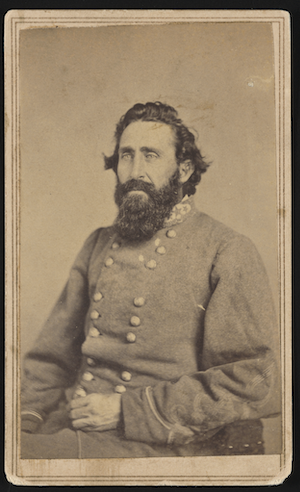
In the first week of October 1864, Confederate Gen. John Bell Hood struck U.S Army Maj. Gen. William T. Sherman’s supply lines north of Atlanta. Hood’s northward thrust positioned his army between Sherman and Atlanta and his army group’s supply base in Chattanooga, Tennessee. Hood attacked the railroad lines that carried food, ammunition, clothing, and medical supplies to Atlanta and to Sherman’s waiting army. This, Hood hoped, would draw Federal forces away from the city. At first, Sherman pursued Hood, and the two squared off in a deadly game of cat-and-mouse along the rail lines running from Nashville and Chattanooga. The costly battle at Allatoona on October 5 left Maj. Gen. Samuel G. French’s division badly crippled. A week later, with almost 900 casualties fresh in his mind, Hood elected to move north toward Dalton.
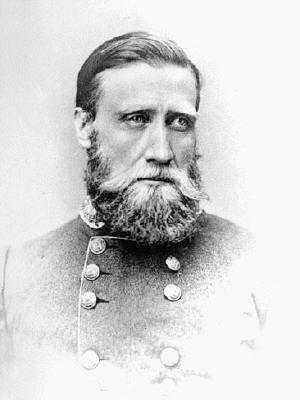
There, on October 13, Hood demanded the surrender of Col. Lewis Johnson’s garrison. His demand came with a heavy-handed warning:
I demand the immediate and unconditional surrender of the post and garrison under your command, and should this be acceded to, all white officers and soldiers will be paroled in a few days. If the place is carried by assault, no prisoners will be taken.[1]
Johnson, who commanded the 44th United States Colored Troops, flatly refused. “I cannot surrender the troops under my command,” Johnson wrote to Hood, “whatever the consequences may be.” Only when faced with the reality that “there was a large force of the enemy,” did Johnson concede that Hood “had men enough to eat us up.” When Hood and Johnson met, the latter still hesitant to surrender, Hood promised that he “could not restrain his men, and would not if he could.” “Not believing myself justified in sacrificing the lives of nearly 800 men,” Johnson consulted his subordinate officers and “was advised by them to surrender.” If Johnson believed his men “were to be treated humanely,” he was taken aback when Hood informed him that he “would return all slaves belonging to persons in the Confederacy to their masters.” Johnson protested and declared the men had been surrendered as soldiers and were to be treated as such. Hood seemingly acquiesced.[2]
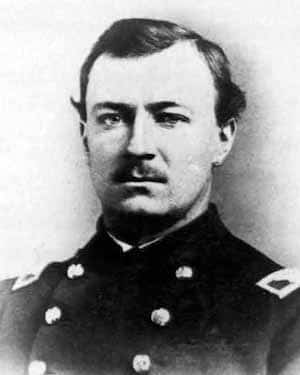
When the roughly 600 soldiers of the 44th USCI marched out of the fort, Confederates from Maj. Gen. William Bate’s division seized upon them. “Although assured by General Hood in person that the terms of the agreement should strictly be observed,” Johnson later reported, “my men, especially the colored soldiers, were immediately robbed and abused in a terrible manner.” “The treatment of the officers of my regiment exceeded anything in brutality I have ever witnessed, and a General Bate was ordered to take charge of us, and immediately commenced heaping insults upon me and my officers,” Johnson wrote. “General Bate,” Johnson wrote, “distinguished himself especially in meanness and beastly conduct.” The Black soldiers were ordered to remove their shoes and then Bate directed them to march along the nearby railroad line and dismantle it. When one soldier refused, he was executed. Earlier, five other men “who, having been sick, were unable to keep up with the rest on the march” had been killed. Along the march, “soldiers made a rush upon the guards to massacre the colored soldiers,” and Confederate officers, including one lieutenant colonel, “endeavored to infuriate a mob.” Only through the “guards’ greatest efforts” was Johnson’s command “saved from a massacre.”[3]

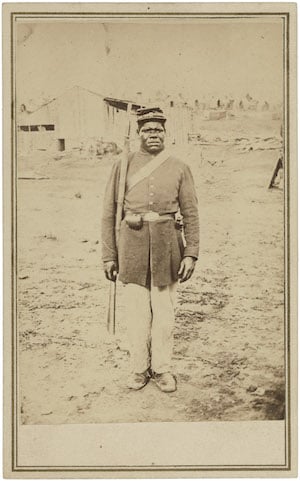
Likely among the men captured at Dalton was Hubbard Pryor. In March 1864, Pryor enlisted in the 44th USCT in Chattanooga. What makes Pryor so notable despite a lack of primary documents detailing his life or service?
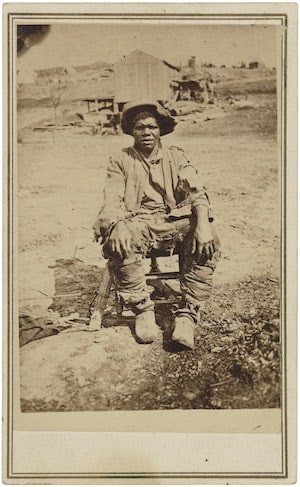
While there are dozens of photographs of Colored units on parade or in garrison, hundreds of images of Black men in uniform, and even images of enslaved people before and during the war, one photo set in particular made Pryor the face of his regiment. In a before-and-after series of images, Pryor was photographed in the clothes he arrived in and later in his newly issued uniform. The latter image shows Pryor outfitted in a U.S. Army frock coat, trousers, and forage cap with a cartridge box slung over his shoulder and accoutrements at his waist. In his right hand, he held his army-issued weapon. In July 1863, the abolitionist Frederick Douglass spoke of this very vision:
“Once let the black man get upon his person the brass letters U.S., let him get an eagle on his button, and a musket on his shoulder, and bullets in his pocket, and there is no power on the earth or under the earth that can deny that he has earned the right to citizenship.”[4]
Gone were the ragged garments and crumpled hat he wore as a slave, and in his place stood a free man ready to take up arms to free other such men. Though his fate remains largely unknown, Pryor’s image lends a face and a story to Johnson’s regiment and the men of the Dalton garrison.
[1] Report of Colonel Lewis Johnson, Forty-fourth U.S. Colored Infantry, commanding post of Dalton, Ga., Official Record, Vol. 39, Part 1- Reports, 718.
[2] Johnson, OR, Vol. 39, Part 1, 718-19.
[3] Johnson, OR, Vol. 39, Part 1, 721.
[4] Frederick Douglass, “NEGROES AND THE NATIONAL WAR EFFORT: AN ADDRESS DELIVERED IN PHILADELPHIA, PENNSYLVANIA, ON 6 JULY I863,” The Liberator, 24 July 1863.
–emergingcivilwar.com
–feature photo credit: history-maps.com