On this day 252 years ago, angry colonists in Massachusetts boarded a British ship in the Boston Harbor to protest what were seen as unfair circumstances regarding tea imports.
Dressed as Mohawk Indians, the mob on Dec. 16, 1773, dumped more than 300 chests of tea overboard into the saltwater – in what has since been immortalized as the Boston Tea Party.
Thing is, Charleston had staged its own tea party two weeks earlier, albeit to far less fanfare and remembrance by history. The fact still remains: South Carolina had the first, and yes, lesser-know boycott regarding British tea.
The Post and Courier editorial board wrote in 2023:
Charleston’s protest actually took place 13 days before Boston’s, and it was an equally serious if less dramatic affair. The disputed tea arrived in Charleston on Dec. 2, 1773, and the very next day, so many concerned colonists gathered in the great hall at the Exchange Building … that some feared its second floor would collapse under their collective weight. It shows how popular tea was among wealthy Charlestonians (and other colonists) in the late 18th century, its afternoon consumption a sign of a family’s status and upward mobility, as well as the social interactions.
However, those who think the colonists’ problem was simply that the Tea Act increased the cost of this elite, trendy beverage would be mistaken. Despite the new 3-penny per pound tea tax, the act actually lowered the cost of British tea because it eliminated the duty on tea and the mandatory tea auctions in England, which often drove the global price of tea upward. The act let the East India Company’s selected merchants set more competitive prices in their particular American market
One legacy of the act is that it led to the creation of what is today called the Charleston Metro Chamber of Commerce, which is considered the oldest and longest-running city chamber in America, having been formed three years before the birth of the nation.

What happened here?
The Post and Courier reported two years ago on the 250th anniversary:
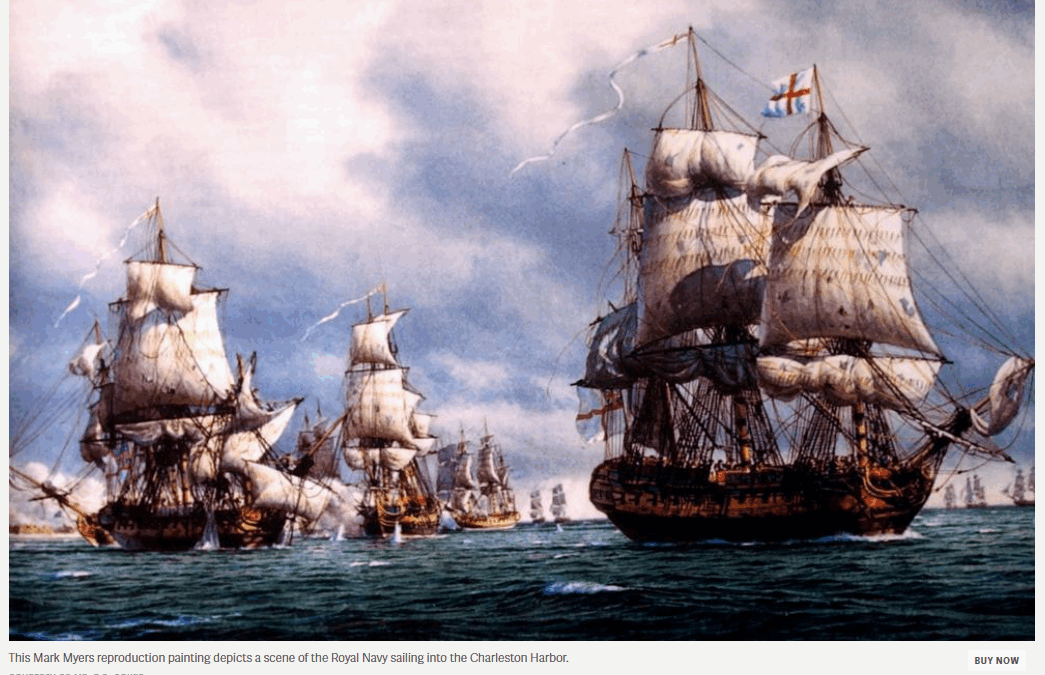
In December 1773, Charles Towne patriots decided enough was enough. Tea aboard a British ship idling in the Charleston Harbor went unclaimed.
This was done by design.
After 20 days, … all 250 large chests of East India Co. tea aboard could be seized. Unlike the infamous Boston Tea Party, the tea was stored in the basement of the Exchange Building as a clear message of Colonial frustration against overtaxed goods. Civic leaders and merchants, like Christopher Gadsden and Charles Cotesworth Pinckney, prompted a communitywide pledge to refuse future imports.

The tea remained locked up in the Exchange Building at what is now East Bay and Broad streets for three years. On Oct. 14, 1776, it was sold to help fund the patriot cause in the early days of the American Revolution. More to come on this in 2026 in The Post and Courier.
Powder Magazine Museum Director Katherine Pemberton said that she’s heard from a lot of visitors and locals that they were surprised to hear Charleston had its own protest to the Tea Act of 1773.
“Sometimes history has been oversimplified to just have one event stand in for other things, and the result of that is that many people don’t realize how amazing and rich their own local history can be,” Pemberton said.
While the phrase “Tea Party” is widely used today, it originated in the 1800s long after the events took place, according to historical records.
“The most fascinating aspect to me is that the idea of ‘no taxation without representation’ and the Tea Act sparked similar outrage throughout the colonies. News of a protest did not travel that fast between Charleston and Boston at that time. There was no coordinated effort. This was a series of independent actions in response to the same injustice they saw.”
The protests were a catalyst for ideals that would later become the foundation of America’s Declaration of Independence and Constitution.
It also directly led to the creation of a local association of businesses, which has existed ever since and now is called the Charleston Metro Chamber of Commerce.
The chamber was organized by conservative merchants who felt conflicted about the high taxation and how to respond to it. South Carolina Historical Society’s archives show that it is also the second-oldest commercial organization of any kind, second only to New York State’s Chamber of Commerce.
What started as a handful of merchants two centuries ago now represents 1,600 businesses and 168,000 employees in the Charleston metro market. The chamber not only helps businesses thrive, but their advocacy efforts also support social issues like education, workforce development and affordable housing.
More on Charleston’s tea party
Here is how Hannah Mooney of the South Carolina Historical Society put it in 2022:
“No taxation without representation” became a rallying cry for colonists in the mid-18th century. Prior to the American Revolution and the country’s independence, the British government imposed a series of taxes on goods imported to the colonies. Many American colonists, including those in Charleston, felt these taxes were unfair and sought ways to openly resist the British government’s control.
In late 1773, Charlestonians got their chance. On December 1st, a vessel containing a shipment of over 250 chests of tea arrived in Charleston Harbor. A group including local politicians and landholders met and discussed how to handle this shipment of taxed tea. By December 3rd, the group agreed not to pay the duty on the tea which forced the boat, and its contents, to sit unclaimed in the harbor. After 20 days unclaimed, the tea was seized and brought ashore where it was stored in the Exchange Building. Though less dramatic and violent than the Boston Tea Party which occurred just a few weeks later, the Charleston Tea Party sent a message to the British government that they wouldn’t play by their rules. It also sent a clear message to merchants that Charlestonians weren’t interested in purchasing highly taxed goods.
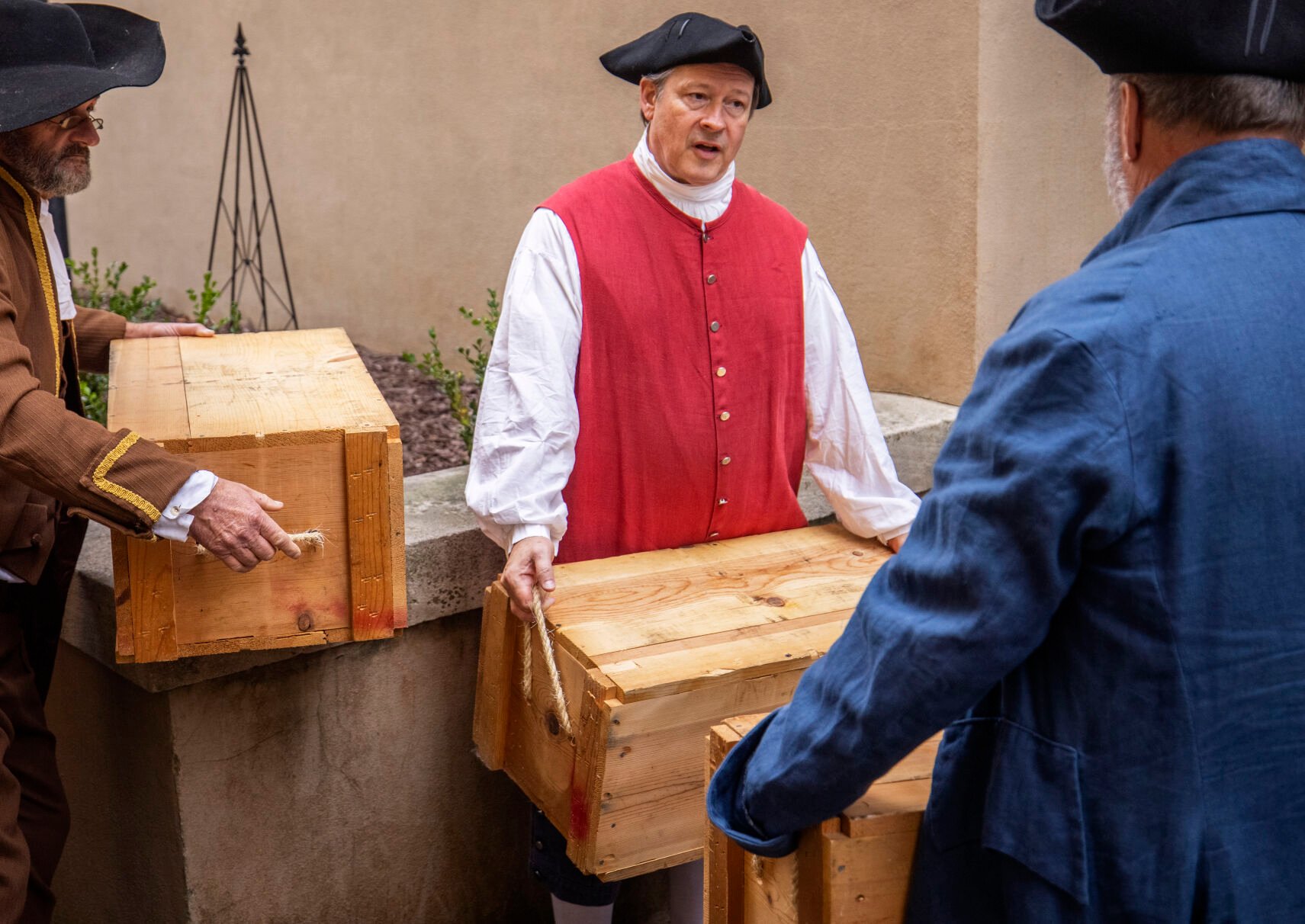
In response, local merchants organized to advocate for the business community. On December 9, 1773, Charleston area merchants met at Mrs. Swallow’s Tavern on Broad Street to form what became the Charleston Chamber of Commerce. John Savage, a local merchant who built his fortune working with Gabriel Manigault, was appointed president and a committee of 21 was selected. According to a 1917 Annual Report, the Charleston Chamber of Commerce is “the oldest city-commercial organization in the United States and the second oldest commercial organization of any kind in the United States. Only the Chamber of Commerce of the State of New York ante-dates us.”
–postandcourier.com