TEXAS: Texas A&M researchers preserving historic cannon from the Alamo
COLLEGE STATION, Texas — Researchers at Texas A&M University are preserving a piece of Texas history.
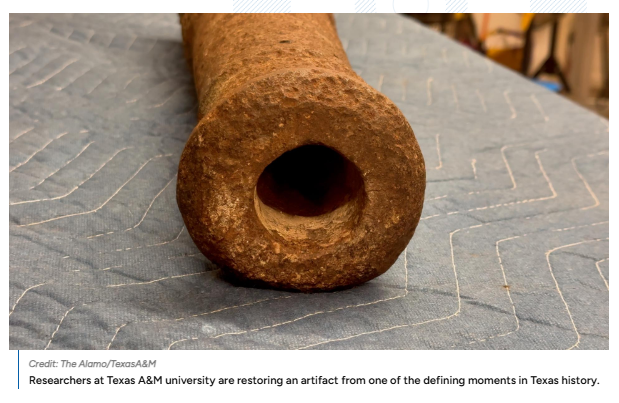
According to the university, researchers at the Conservation Research Laboratory are working to preserve and restore a 90-pound cannon believed to have been used in the 1836 Battle of the Alamo.
Texas A&M said the cannon was found in 1852 in the yard of a property adjacent to the Alamo. Alamo Trust, Inc, the nonprofit that oversees the daily operations of the Alamo, said the cannon was found by Samuel Maverick, one of the signers of the Texas Declaration of Independence who had been at the Alamo during the siege.
The Alamo said the cannon ended up on the Maverick family’s Sunshine Ranch, where it was used as the base of a bird bath until it was removed and seemingly lost in 1955.
The cannon was recently found by a family member and donated back to the Alamo, and is now being restored thanks to the Texas A&M team, lead by Dr. Christopher Dostal, an assistant professor in the Department of Anthropology and director of the Conservation Research Library.
According to The Alamo Press Room, the cannon is a 90-pound roughly three-feet-long swivel cannon.

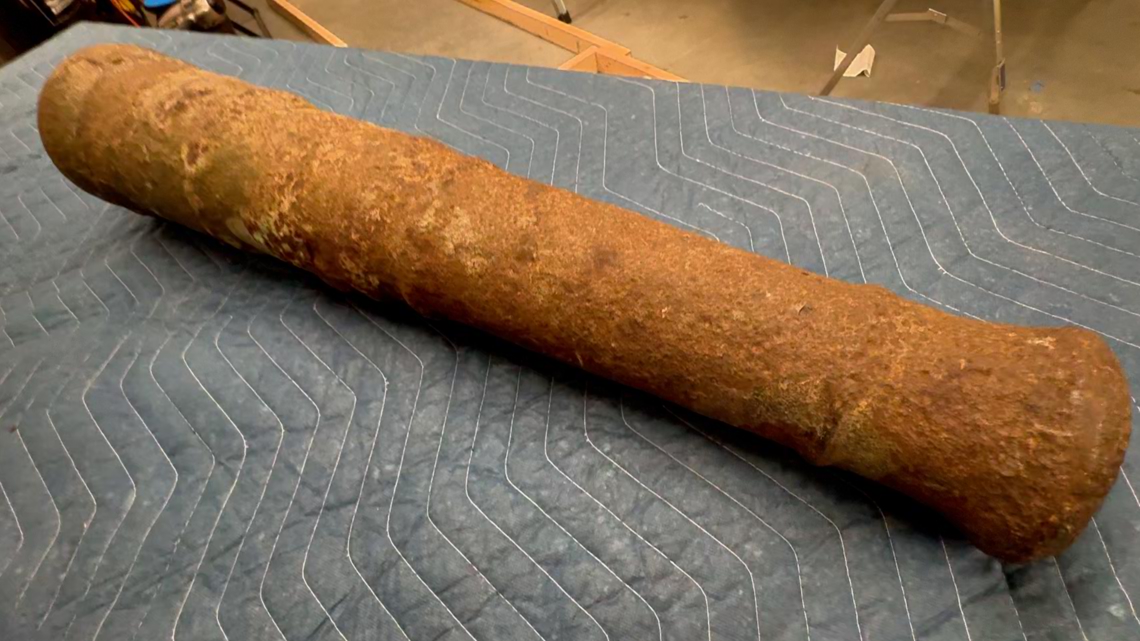
The cannon is one of several Alamo cannons currently in the care of the university, according to Texas A&M. It is reportedly the 16th cannon from the Alamo’s collection that Texas A&M has worked to preserve.
Dostal said the preservation process starts with “detailed documentation” and gentle surface cleaning of the cannon before it is immersed in a sodium hydroxide solution to remove salts embedded in the metal.
After the cannon is rinsed, it will be coated with tannic acid and finished with a layer of microcrystalline wax for “long-term protection,” the university said. According to Texas A&M, the treatment can take anywhere from a few months to several years.
“We gave [the Alamo] a guesstimate as to when they’d be finished, but ultimately what they understand and what we understand is you can’t reason with a cannon,” Dostal said. “You just have to keep going with the treatment until it stops releasing salts.”
Dostal said preserving artifacts like the cannon plays an important role in understanding history.
“We all know the story of the Alamo, but the actual physical objects that the players of that story used make it real to us,” Dostal said. “We think it’s very important to preserve that material and to have it stable and tangible and able to be connected with for many, many generations past ours. So that’s why we’re doing this.”
Once the restoration process is complete, the cannon will be put on display at the Visitor Center and Museum at the Alamo, which is scheduled to open in late 2027 or 2028, according to the university.
–kcentv.com