
SOUTH CAROLINA: Remains of teen soldier who died in Battle of Camden identified 246 years later
SC Battlefield Preservation Trust helped complete Maryland teen’s story
A Texas-based forensics company has solved a vexing mystery, identifying the long-buried remains of a Revolutionary War soldier — who turned out to be a teenager from Anne Arundel County.
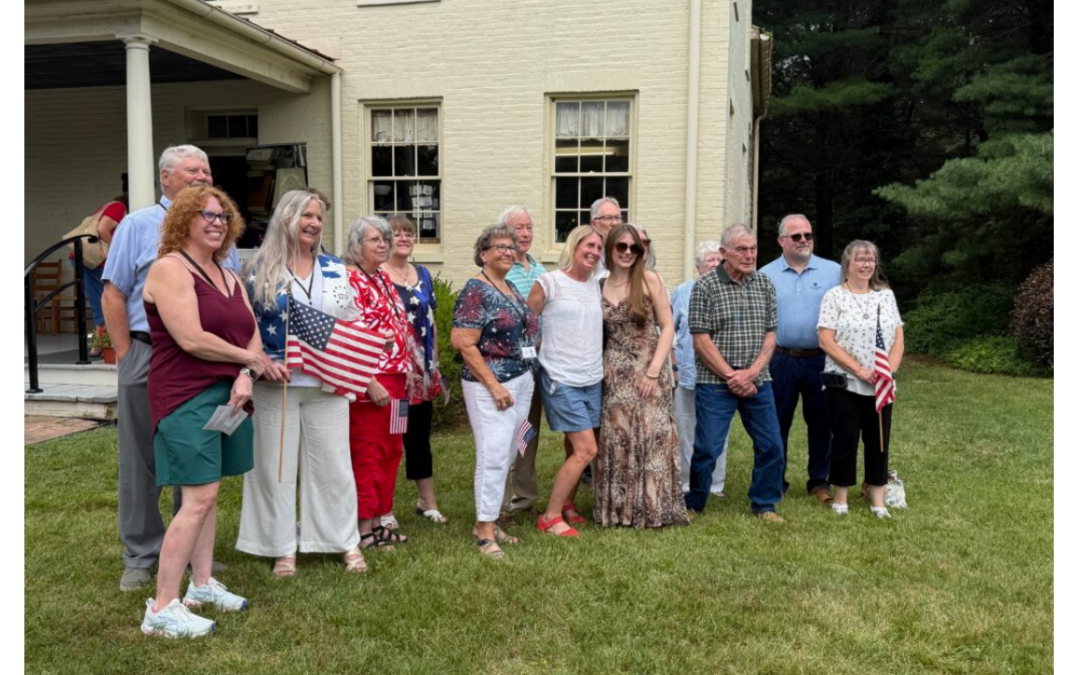
And in his home county Thursday, surrounded by a host of his descendants, they told his story.
John Pumphrey was between 13 and 15 years old when he joined the 7th Maryland regiment of the Continental Army to fight British troops. He fell at South Carolina’s Battle of Camden on Aug. 16, 1780, a devastating defeat that left more than 1,000 American troops dead.
The scientists at FHD Forensics, the company that made the discovery, believe that their investigation is unique. While researchers have exhumed Revolutionary War era remains for study, they have never before unearthed unknown remains and identified them, said Allison Peacock, founder and president of FHD Forensics.
“Nobody’s ever identified a 246-year-old John Doe before,” Peacock said.

Archaeologists found Pumphrey, who would have been 16 to 18 years old at the time he died, alongside several other soldiers in a shallow, unmarked grave at the battlefield in 2022.
Though more than 240 years had passed, researchers were able to recover DNA evidence from Pumphrey’s petrous bone, a uniquely hard inch-long bone at the base of the skull, behind the ear.
“The teeth are usually the best, because they’re protected in the jaw, but this round they kept going through the teeth and going through the teeth — and just weren’t getting anything,” Peacock said. “So they went and tried the petrous.”
But to identify Pumphrey, the team of scientists needed a little bit of help. They needed to compare Pumphrey’s sample to DNA submissions from other potential relatives. Only then could they develop the family trees that would lead them to the truth.
It was an “extremely intricate puzzle,” said Valerie Kemp, senior investigative genealogist at FHD.
Imagine “sifting through like 20,000 matches to look through DNA segments to figure out groups to have to build peoples’ trees back seven, eight, nine generations to find that person in common,” Kemp said.
Officials from the forensics company assembled a list of 54 people they deemed Pumphrey’s last remaining “next of kin.” Hosts of them traveled from near and far to a celebration on Thursday at the Ann Arrundell County Historical Society’s Benson-Hammond House, many donning patriotic garb and waving American flags.
At the event, FHD Forensics revealed Pumphrey’s name and biographical details for the first time, surprising distant descendants, some of whom share the Pumphrey name.
Julie Pumphrey Strickland, who was adopted in the Baltimore area as a child, said she had already embarked on a personal journey to uncover details about her biological family when she heard from researchers conducting the Revolutionary War study. She only discovered her Pumphrey roots about nine years ago, she said.
“This has just been magical,” said Pumphrey Strickland, who traveled to Thursday’s ceremony from South Carolina. Ironically, she lives just 10 miles from the battlefield where Pumphrey’s remains were discovered.

Historical records, including newspapers and letters, helped researchers piece together the rest of Pumphrey’s story.
They confirmed Pumphrey was a direct descendant of Walter Pumphrey, a Quaker who immigrated to Burlington, New Jersey, from Gloucester, England in 1678. In 1713, the family moved to the Baltimore area, to provide carpentry services to the many Quakers migrating to the city.
The family amassed extensive real estate and business holdings. John Pumphrey’s grandfather, Ebenezer Pumphrey, became a significant player in the Baltimore region’s lumber and building industries. Genealogical records showed Pumphrey was connected to several prominent families in the county at the time, with names like Griffith, Ridgely, Cheney, Welsh and Warfield.
That knowledge initially perplexed researchers.
“We thought, what is a boy from these families doing going to war at 14? It just didn’t make any sense,” Peacock said.
That’s when they learned more about the events surrounding John Pumphrey’s father’s passing. After his death in 1771, the family’s estate, and their tract of land, called Mistake in Friendship, mysteriously passed into the hands of his cousin, Rezin Pumphrey, an odd development considering that Pumphrey’s father likely had a widow and several sons who would have inherited the land first.
Some 25 years after the war’s end, John Pumphrey’s brother Greenberry began a legal battle to secure the land back from Rezin, arguing that they had been defrauded, according to notices posted in the Maryland Gazette.
With no prospects of land ownership, young John Pumphrey might have sought a renewed future for himself in the Continental Army, the researchers theorize.
“You have a young man who hears about the world literally coming to his doorstep across the river — when the second Continental Congress moved into Baltimore to get away from what was happening in Philadelphia,” Peacock said. “That happened just a few days before John Pumphrey decided to enlist.”
“His story was really amazing to me, because it revealed to me someone that was fighting for freedom from tyranny, both at home and on the battlefield,” Peacock said.
The work, which costs tens of thousands of dollars, was supported by the South Carolina Battlefield Preservation Trust, which helped to trace Pumphrey’s story as a soldier.
Researchers believe that Pumphrey marched more than 1,000 miles during his years in the Army. They believe he camped at Valley Forge, learning from Prussian Gen. Baron von Steuben and Gen. George Washington. They believe he would have fought in the Battle of Monmouth Court House, after which the British withdrew into New York. They also believe he camped at Morristown, enduring one of the harshest winters in American history, during which the New York harbor froze.
“It’s an honor for me to be here today to honor your soldier,” Rick Wise, executive director and military historian at the South Carolina Battlefield Preservation Trust, told the crowd of descendants. “He has waited almost 246 years for his name to be said out loud again. The blood that ran through his veins is going through yours.”
But the British carried their offensive into the South, and the Maryland regiment was ordered to march toward Charleston, South Carolina.

“Your soldier was struggling along with the rest,” Wise said. “Their uniforms were threadbare. Those that had shoes were so worn that they were falling apart. Food was difficult to find.”
After weeks of marching, subsisting on green corn, green peaches and brown water, Gen. Horatio Gates decided he wanted to occupy a new position in Camden. On the eve of the August battle, Gates ordered the soldiers to begin marching at 10 p.m.
“You got four ounces of molasses to wash down your very lean beef that they had, and not really well-cooked cornmeal,” Wise said.
Somewhere along a sandy tree-lined road, the two armies met.
“Around 2:30 in the morning, all of a sudden there were shouts, gunshots, the clash of steel on steel, the sabers clash, and it was the cavalry of both armies engaging,” Wise said.
It was chaos. In the melee, some inexperienced American soldiers turned and ran, and the Americans’ position quickly collapsed. But the soldiers of the Maryland regiment held the British at bay for about 45 minutes, allowing many other soldiers to withdraw, Wise said.
“Your soldier was one of those who held the line that allowed those other soldiers from various places on the battlefield to have the opportunity to escape,” he told the crowd.
John Pumphrey’s remains were found alongside several other soldiers’, including another teenager, two soldiers in their 20s and one soldier in his 40s. Wise, himself a veteran, said he envisions the oldest soldier leading the group — “with them to the end, surrounded.”
“I see them back-to-back, defending, protecting each other. And then one by one, they went down,” Wise said.

–This story was originally produced by Maryland Matters, which is part of States Newsroom, a nonprofit news network which includes SC Daily Gazette, and is supported by grants and a coalition of donors as a 501c(3) public charity.