

Last week, Sen. Charles Schumer, the leader of the Democrats in the United States Senate, introduced a resolution on behalf of himself and 40 other Senate Democrats that, if passed, would record the sense of the Senate as condemning the media superstar Tucker Carlson because of the political, historical and cultural opinions of a guest on Carlson’s podcast. You read that correctly: The U.S. Senate is being asked to condemn Carlson because of what someone else said.
Here is the back story.
When James Madison was crafting the iconic language of the First Amendment — “Congress shall make no law … abridging the freedom of speech or of the press” — he insisted that the word “the” precede the word “freedom” in the text of the amendment so as to emphasize the understanding of the drafters and ratifiers that expressive freedoms preexisted the drafting of the amendment. The theory of law offering that the freedom of speech is prepolitical offers as well that it is natural. It comes from our humanity.
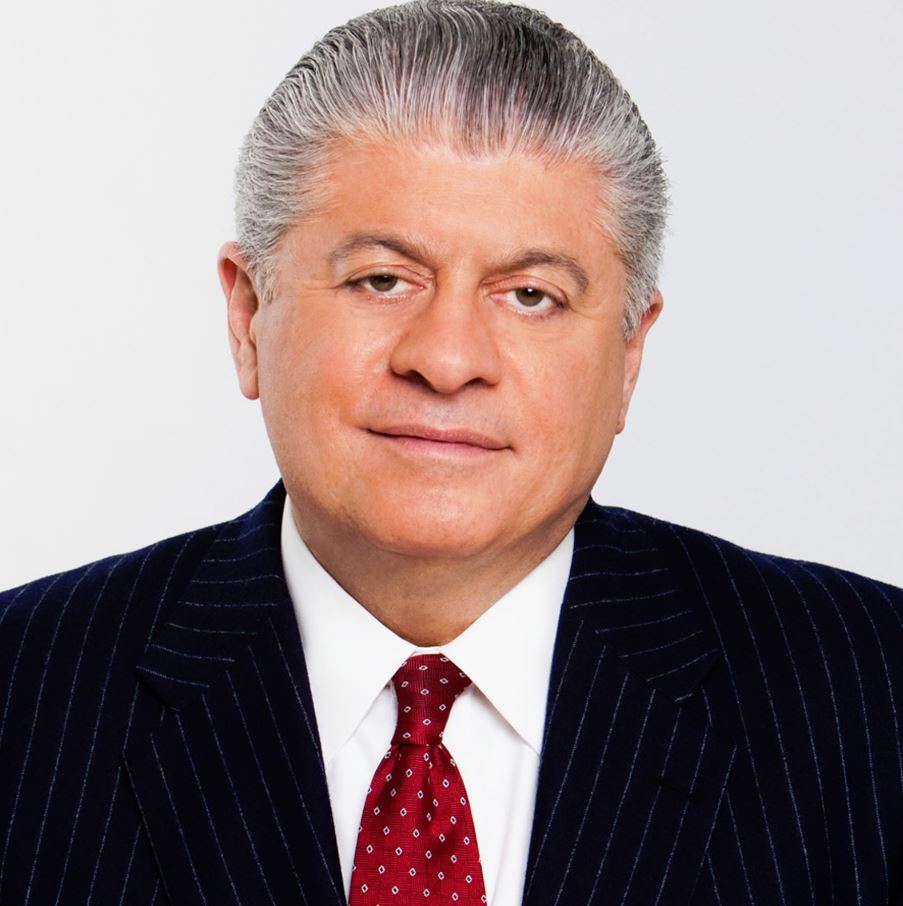
Judge Andrew Napolitano
The theory of the personal origin of human freedom was crafted by Aristotle, refined by St. Augustine, codified by St. Thomas Aquinas, articulated in treatise form by John Locke and woven into the Declaration of Independence by Thomas Jefferson, who wrote that pursuant to “the Laws of Nature and of Nature’s God” we are all endowed by our “Creator with certain unalienable Rights, that among these are Life, Liberty, and the Pursuit of Happiness.”
Some scholars contend that freedom comes from a collective community consensus, but most accept the Madison/Jefferson view that freedom is either a gift from God who gave us perfect free will or, because our human nature has developed over thousands of years to seek the truth and avoid pain, our nature has become imbued with the exercise of basic freedoms; chief among which — after life itself — is speech. Of course, if freedom depends on community consensus, it is hardly inalienable.
Madison’s task as the drafter of the Bill of Rights was to codify Jefferson’s lofty language and the values articulated by it into the positive law of the land; in this case, the supreme law of the land.
Some scholars have argued that the speech and press clauses of the First Amendment were intended only to prohibit congressionally enacted prior restraint on speech and publications. And some have argued that the clauses only restrain Congress, not the states nor the president. Yet, after a judicial revolution on expressive rights in the federal courts in the 1960s, it is clear that today no government and no person using government assets may abridge the freedom of speech or of the press.
Whatever one’s understanding of the origins of the human freedoms, it is also clear beyond serious dispute that the currently prevailing and nearly universally accepted judicial understanding of the freedom of speech and of the press in the United States reinforces that political speech can be unbridled. The whole purpose of the First Amendment speech and press clauses is to encourage — and to require the government to protect — open, wide, robust, even incendiary, caustic and hateful expressions about the policies and the personnel of the government.
Now, back to Chuck Schumer and Tucker Carlson.
In furtherance of the government’s obligations under the First Amendment are numerous prohibitions, two of which are relevant to this Schumer resolution condemning Carlson. First, the government may not evaluate the content of political speech and act upon that evaluation. Thus, it may not pick and choose what speech it likes and praise it and what speech it hates and condemn it.
Doing the latter — which is what Schumer proposes the Senate should do to Carlson — leads to a second prohibition. The government may not chill the exercise of the freedom of speech. Chilling consists in government behavior — direct or indirect — toward speech that gives the speaker or writer or those similarly situated pause or fear before uttering expressions.
Knowing Tucker Carlson as I do — we worked together at Fox News and remain friends and colleagues today — nothing will chill his exercise of the freedom of speech. But that does not absolve the Senate from the charge of chilling. Chilling is utterly prohibited, no matter the sensitivities or backbone of its target.
The Schumer proposal is a resolution, meaning, it is not legislation that, if passed in the Senate, would proceed to the House of Representatives. It cannot have the force of law. It purports to express the sense of the Senate on Carlson’s decision not to “push back” when a guest named Nick Fuentes articulated speech that Schumer found to be hateful. But the jurisprudential prohibition on evaluating content and on chilling absolutely prohibit Schumer from using the levers of government power available to him to attack Carlson.
Of course, Sen. Schumer can speak out about whatever he found objectionable from Fuentes and from Carlson’s decision not to challenge his guest. I suspect Schumer’s is a political motivation intended to see if Republicans will support or oppose his proposal. But there is more here than meets the eye.
Does the government have the freedom of speech? Under the natural law, it does not, as only human beings have natural rights. The government is not a naturally existing being. It is an artificial construct based on a monopoly of force in a given — sometimes changing — geographic area. In order to exist, government takes assets from persons in its geographic area via taxes and negates some of their freedoms via laws and regulations.
Whatever the government takes and whatever it negates, it may not abridge the freedom of speech, directly or indirectly, by taxes or threats or commands or prohibitions or praises or chilling. If it could, then we’d have not even the semblance of a representative democracy in Washington or anywhere else.
To learn more about Judge Andrew Napolitano, visit https://JudgeNap.com.