NORTH CAROLINA: Ten endangered red wolves exchanged between NC and NY in conservation effort
A two-way transfer involving a breeding pair and their five pups aims to strengthen the genetic diversity of a North Carolina critically endangered species.
Ten endangered red wolves were transported between North Carolina and New York Tuesday as part of a coordinated effort to preserve the critically endangered species.
Pilots to the Rescue — a nonprofit that uses volunteer pilots to transport animals — flew three red wolves from the Wolf Conservation Center in South Salem, New York, to Raleigh Regional Airport in Person County.
One of those wolves, Sassafras, was heading to another North Carolina facility. The other two, Mac and Sabine, were brought to the Museum of Life and Science in Durham.

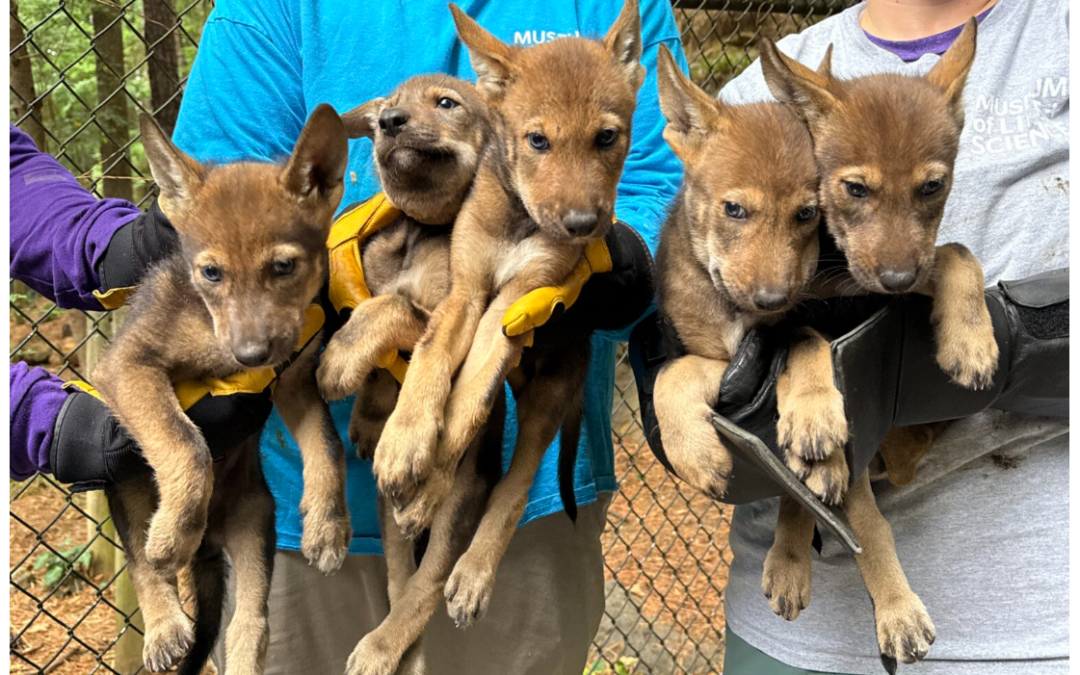
The team then returned with a breeding pair of wolves and their five young pups from the museum. The seven wolves were transported by ground from New Jersey to the conservation center in New York.
The family includes first-time parents Carolina and Jacques and their five pups, who were born in May. The exchange is part of a breeding program designed to maintain genetic diversity among red wolves living in human care.
Museum officials said the move will allow the family to stay together while giving the growing wolves more space. Carolina and Jacques could have another litter in 2027.
The Museum of Life and Science has participated in red wolf conservation for decades. The exchange allows the museum to coordinate breeding and family groups as part of the recovery effort.
Sherry Samuels, senior director of animal care, said the transfers are a routine part of conservation work. She said she hopes the new wolf pair will produce pups, though there is no guarantee.
“We’re just temporary housing,” she said. “They’re not here forever, so I always know they’re going to head on.”
The red wolf is one of the world’s most endangered animals. Once found across much of the Southeast, the species was driven to the brink of extinction by habitat loss and human predation.
Today, eastern North Carolina is home to the only remaining wild population. The U.S. Fish and Wildlife Service estimates that 21 adult red wolves remained in the wild, along with about 14 pups.
Samuels said the museum’s conservation program has pioneered new techniques such as fostering captive-born pups with wild red wolf mothers, helping to support the recovery of the wild population.
“We’re better because of having animals like this around,” Samuels said.
–ncnewsline.com